

A single lighting supplier keeps fixture orders together and avoids the delays that separate distributors cause on Southern California jobs. For local bulk recessed lighting orders, look beyond the price per fixture. Check warehouse stock, compatibility between product lines, and support for Title 24 updates from the state energy commission.
Separate vendors for architectural fixtures, downlights, and emergency backups can leave you with mismatched color temperatures or drivers. Their freight schedules may clash, too. Putting the full fixture package with one wholesale distributor eliminates backorders and keeps crews working instead of waiting for parts.
What’s Inside This Guide
- Core Qualities of a Dependable Wholesale Partner
- Evaluating Distribution Partners Line by Line
- The Job-Site Procurement Path from Spec to Delivery
- Verifying Hardware Quality Before Field Installation
- Managing Freight Timelines and Los Angeles Staging
- Uncovering Hidden Margins Beyond the Fixture Price
- Questions Los Angeles Project Managers Ask
- Securing Your Wholesale Account with Raycos Lighting
Core Qualities of a Dependable Wholesale Partner
A good catalog tells you little about an LED lighting wholesaler‘s ability to supply your job. You need stock in the region and staff who understand rough-in work, the wiring and mounting done before walls close. Waiting three weeks for replacement drivers or matching trims can stop work at a critical stage.
Video: Comparing 200 lm/W LED tube lights with standard T8 tubes for purchasing (Chloe@Deep Industry)

- Documented local inventory: Core lines, including downlights, canless housings, and flat panels, should be available from the warehouse without waiting for overseas containers.
- Verified regional compliance: Light-output data files and complete certifications should be ready for plan checks, meeting state requirements without repeated revisions.
- Integrated technical support: Staff should know how to check low-voltage dimming drivers, magnetic tracks, and high-output ceiling fixtures against your project documents.
- Consistent binning and finish control: Batch controls should keep light color and trim powder coatings identical, even when you order across several construction phases.
Working with a responsive recessed lighting supplier protects electrical subcontractors from the costs of split purchase orders. Our advice on checking a wholesale supplier before you order can help you tighten your checklist before releasing fixture packages for purchase.
Evaluating Distribution Partners Line by Line
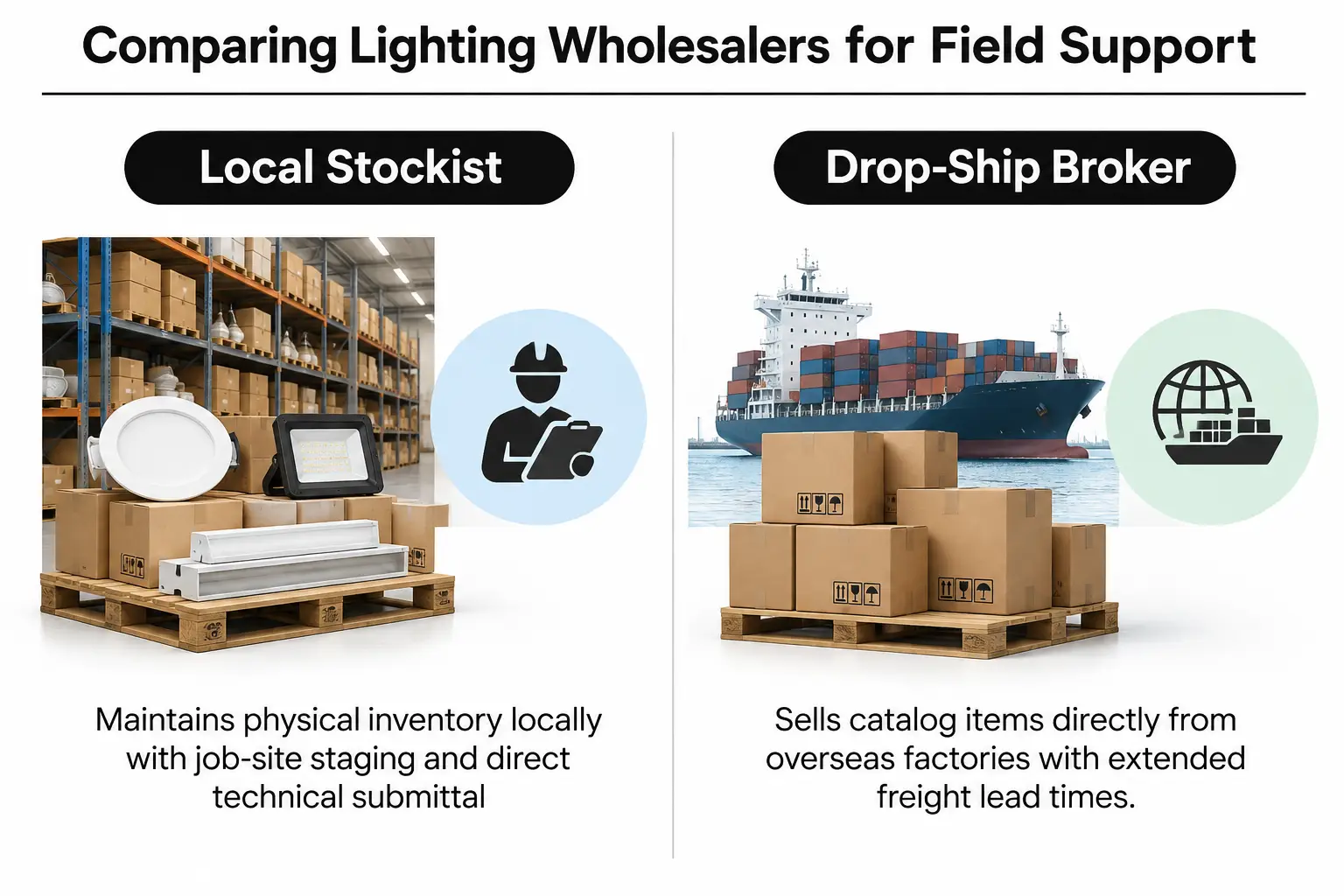
Ask specific questions to find out who holds stock and who simply forwards orders to distant factories. Crews handling residential developments and retail tenant improvements need clear answers. A communication gap about available stock or shipping dates can become an expensive delay on site.
| What to check | What to ask the wholesaler | Warning sign |
|---|---|---|
| Warehouse stock | Are the specified units on shelves here in Los Angeles? | Unclear shipping estimates or regular direct shipments from overseas factories. |
| Safety certifications | Do you have current UL, ETL, or DLC documents for every product code? | Missing lab test sheets or electrical driver assemblies without a listing. |
| Batch consistency | Can phased orders meet sub-3 MacAdam ellipse binning, a tight limit on light-color differences? | Visible differences in light color between neighboring ceiling fixtures. |
| Driver compatibility | Have the low-voltage 0-10V dimming drivers been tested with commercial lighting controls? | Flicker during final testing, with no help troubleshooting on site. |
| Deliveries by phase | Can rough-in housings ship separately from the final decorative trims? | All-or-nothing shipping that leaves fragile finish trims stacked on an active site. |
For residential and commercial projects alike, check how the supplier handles changes in stock needs. Materials must arrive in time for electrical rough-in inspections, not just on a date that suits the distributor.
The Job-Site Procurement Path from Spec to Delivery
Clear ordering steps cut down on paperwork and follow-up calls. Using one lighting equipment supplier gives you a way to check the engineering plans against the hardware that arrives. Set those checks before placing the order, rather than sorting out differences on the loading dock.
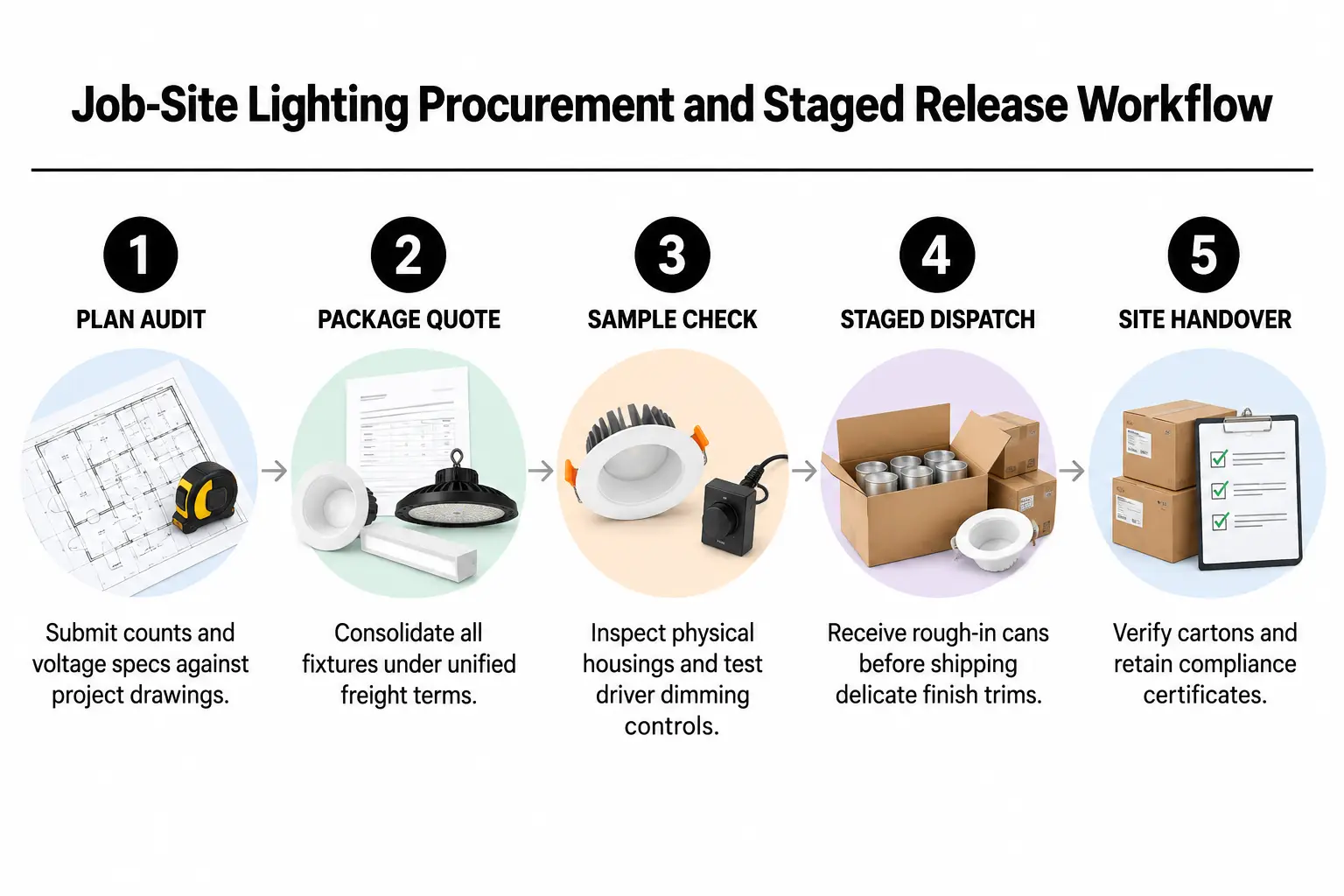
- Schedule takeoff and plan audit: Send fixture counts from the plans, along with dimming, voltage, and mounting requirements. Identify anything with a long lead time.
- Comprehensive package quote: Get one wholesale quote covering recessed cans, linear fixtures, drivers, and emergency modules, with shared freight terms for the package.
- Submittal review and physical samples: Check finish samples, such as a white 3-inch trimless round recessed light, and confirm that mounting brackets fit the ceiling framing.
- Staged release schedule: Agree on separate delivery dates. Rough-in cans need to arrive before drywall goes up, while trim packages stay protected in the warehouse.
- Site check and documentation handover: Match delivered items to the freight paperwork. Collect product specification sheets and warranty certificates for the building officials.
An experienced local wholesaler ensures that specialty components, including linear ceiling tracks and downlights, produce the same light color throughout the building, rather than leaving you to match separate product lines yourself.
Verifying Hardware Quality Before Field Installation
Experienced electricians test samples long before the final delivery truck arrives. Checking heat sinks, the parts that draw heat away from LEDs, is part of that work. Internal wiring and driver build quality deserve the same attention before ceilings close and repairs become service calls.
Check the thickness and finish of extruded housings. Architectural channels such as the dip 1 recessed aluminum channel use thick aluminum bodies to draw heat away from sensitive LED chips. This keeps the system within the manufacturer’s temperature limits.
Installer’s note: Test three downlights with the planned dimming controls on site before running wire to sixty ceiling openings. Confirm that they don’t flicker at low settings.
Review certifications from the testing lab or Intertek to confirm that components meet local fire ratings. Our guide to common recessed lighting mistakes in LA homes covers problems that lead to rework, especially with high-output cans placed near insulation.
Managing Freight Timelines and Los Angeles Staging
Space is tight on urban job sites. Pallets of delicate fixtures in an unfinished building are exposed to dust and damage, and parts can go missing. Work with a bulk lighting supplier that can split deliveries so materials arrive when the crew needs them.
Local stock lets trades request rough-in boxes first, then bring in light engines and trim rings weeks later for the finishing work. Keeping those deliveries separate protects site safety and leaves corridors clear for other trades.
Before choosing a wholesaler, confirm that its dispatch hub can reliably serve your job sites. A responsive delivery team prevents the crew standby costs that come with missed delivery windows.
Uncovering Hidden Margins Beyond the Fixture Price
The lowest unit price can hide expensive installation problems. Hardware without built-in junction boxes takes more work in the field. Brittle tension clips add trouble, too, and the extra labor can quickly erase what you saved on materials.
Compare the full installation cost before choosing a fixture. An integrated white three-head trimless recessed light, for example, puts several task lights in one ceiling opening. That shared cut-out reduces finishing labor compared with separate openings.
Our comparison of buying recessed lights wholesale or retail explains the extra freight fees and paperwork that come with separate vendors. Warranty calls take more time as well. Using one distributor for residential recessed fixtures and commercial lighting reduces the risks in getting materials to the job.
Questions Los Angeles Project Managers Ask
Why should a general contractor avoid sourcing lighting from multiple catalog distributors?
Split orders create delivery conflicts and can leave fixtures with different color temperatures. Warranty claims also get harder if a driver fails and each vendor says the other supplied the problem component.
How do local stock holdings streamline Title 24 compliance inspections?
A regional distributor stocks certified high-efficacy fixtures, which produce more light per watt, with the required JA8 performance documents ready. Having those materials together prevents plan-check rejections and delays in project sign-off.
What should an electrician inspect when receiving canless downlights on site?
Inspect the metal thickness of the driver junction box and check spring-clip tension. For wet-rated installations, check that silicone gaskets are intact. Test a sample box on site to confirm smooth dimming before drywall goes up.
How does single-source procurement reduce job-site electrical labor?
Matching quick-connect cables and compatible dimming controls help crews install fixtures faster. Consistent mounting systems also mean electricians can fit the hardware without making custom wiring changes in the field.
Where can commercial builders verify fixture safety and rebate qualifications?
Builders can search the DesignLights Consortium qualified products list and databases from national testing labs such as UL. A reputable wholesaler supplies product documents confirming those ratings before you order.
Securing Your Wholesale Account with Raycos Lighting
At Raycos Lighting, we supply commercial and residential fixtures to contractors, developers, and electrical professionals across Los Angeles, California. We keep local warehouse stock, from architectural linear systems to trimless recessed hardware, so overseas supply delays don’t hold up your project schedule.
Our technical support team can review fixture schedules for full code compliance on multi-family construction and commercial build-outs. For a closer look at facility efficiency, read our assessment of upgrading an LA business to all-LED lighting.
To review your project documents or set up preferred contractor pricing, contact Raycos Lighting and speak with our commercial lighting team.