

A wet-rated fixture is sealed and tested to withstand direct water contact, including dripping condensation and heavy steam, without shorts or corrosion. At a local LED lighting wholesaler, choosing wet-rated fixtures helps your residential and commercial bathrooms pass rough-in inspections. It also prevents early failure of the driver, the component that supplies power to the LEDs.
Old or wrongly placed damp-rated fixtures in high-moisture areas cause repeat maintenance calls and higher operating costs across a property portfolio.
For contractors and electrical project teams across California, water getting inside a fixture is an avoidable liability. The same applies to designers writing the specifications. A boutique hotel in San Diego needs the right seals, as does a multi-family retrofit in Sacramento. Knowing what to specify saves money and labor on site.
What’s Inside This Guide
- Defining Ingress Protection and Real-World Water Exposure
- Critical Engineering Specs to Demand on Washroom Cut Sheets
- Compliance Frameworks: NEC, Title 24, and Safety Listings
- Vetting a Luminaire Datasheet in Five Steps
- Aligning Fixture Ratings with Specific Washroom Zones
- Costly Specifying Errors That Derail Inspections
- Common Contractor Questions on Sealed Bathroom Fixtures
- Procuring Certified Lighting Through Raycos Lighting
Defining Ingress Protection and Real-World Water Exposure
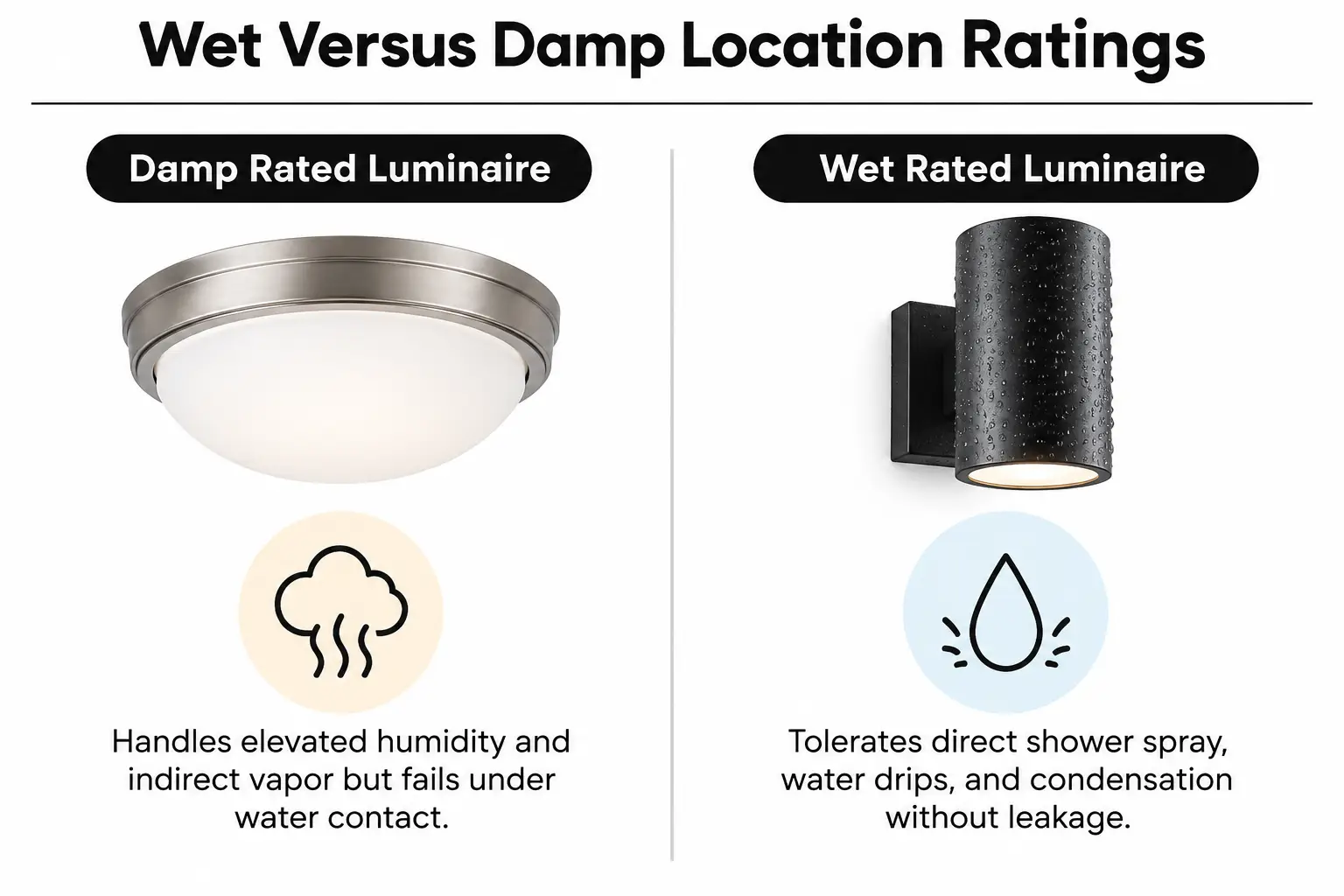
The difference between damp and wet ratings is how water reaches the fixture. Damp-rated lights handle moisture in the air, such as humidity above a powder room vanity. Wet-rated fixtures must withstand water splashing, spraying, or dripping onto them. Their protection covers the housing and lens, along with the electrical parts inside.
Video: Wet vs Damp Rated Recessed Lights – Don’t Buy the Wrong One! (Fix All House Things)
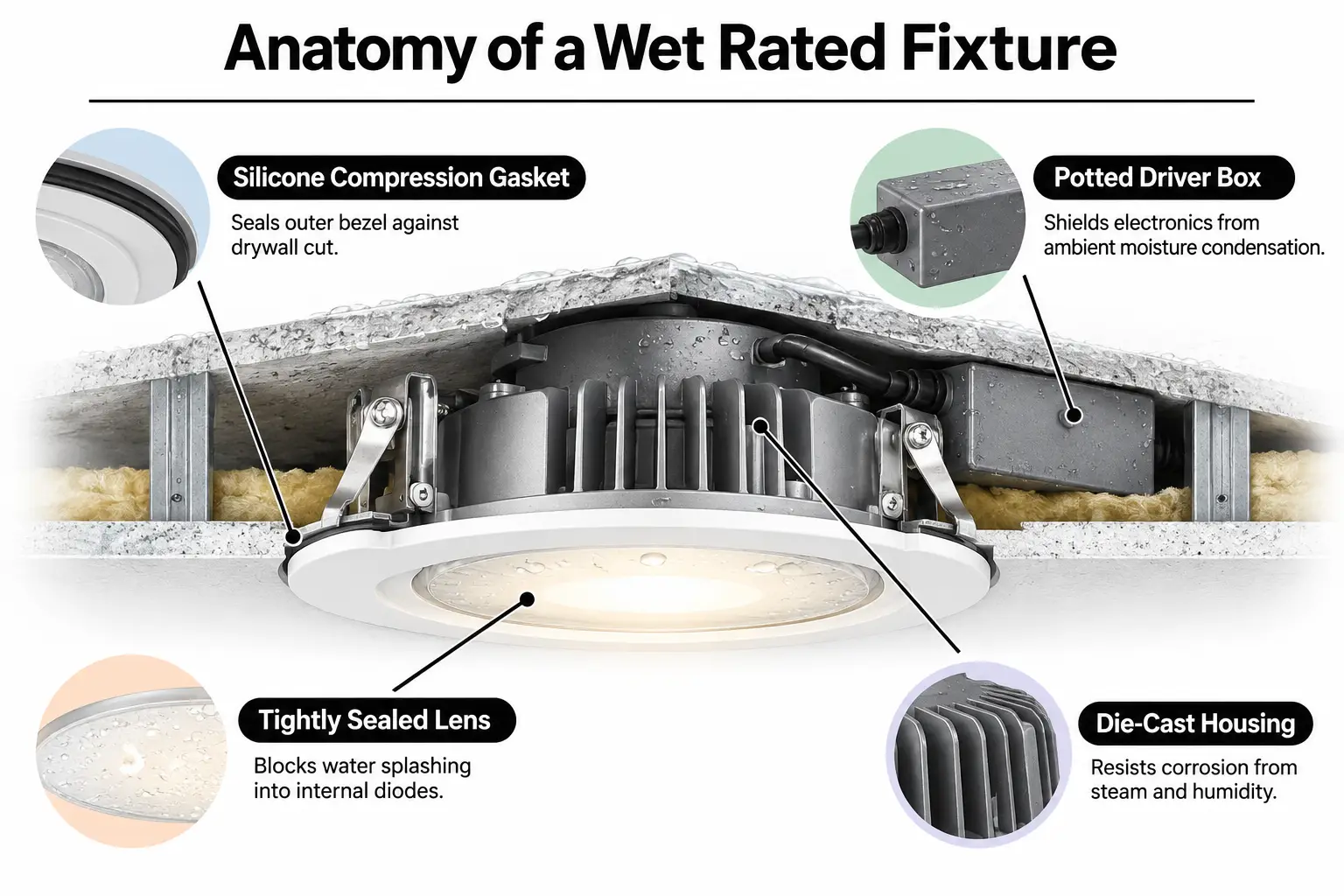
A damp-rated fixture is much like a covered patio in morning fog. It can handle muggy air, but water blown under the cover can quickly cause damage. Wet-rated fixtures use silicone gaskets and closed-cell neoprene barriers, with sealed lens trims. These physical seals keep pressurized water away from the electronics inside.
Engineers measure this water resistance using the International Electrotechnical Commission’s Ingress Protection (IP) system, defined in IEC standard 60529. An IP44 rating is enough for humid spaces. Wet-location performance starts at IP65, which confirms protection against water jets from multiple directions.
As you check a wholesale LED supplier’s credentials, ask for these water-resistance test results. Checking the numbers before you buy helps protect your installations from early electrical failure.
Critical Engineering Specs to Demand on Washroom Cut Sheets
For humid commercial spaces, read the technical data sheets rather than the marketing claims. A reliable LED lighting wholesaler provides accurate cut sheets, the product documents that show tested light output and construction details. You need those figures to judge how a fixture will hold up.
| Engineering Metric | What It Means | What to Specify |
|---|---|---|
| Ingress Protection (IP) | How well the fixture keeps out particles and pressurized water. | Require at least IP65 for enclosed shower stalls; IP66+ for commercial washdowns. |
| UL / ETL Wet Label | North American safety certification based on UL 1598 testing. | Require “Suitable for Wet Locations” directly on the submittal sheet. |
| Corrosion Resistance | How well trim rings and housings resist steam and chlorine. | Specify die-cast aluminum with architectural powder coating or marine polycarbonate. |
| Gasket Material | A flexible seal that prevents vapor from condensing behind ceiling trims. | Specify non-perishing, one-piece silicone or vulcanized neoprene compression gaskets. |
| Driver Enclosure | Protection from moisture for the electronics that convert power. | Require isolated drivers sealed in potting compound and rated for Class 2 electrical operation. |
Durable commercial fixtures cost less to own over their working life. To keep commercial LED lighting costs affordable, weigh the purchase price against how well the fixture holds together over time. That balance helps hotels and commercial facilities avoid recurring repair bills.
Compliance Frameworks: NEC, Title 24, and Safety Listings
California electrical installations must meet state and national fire and electrical rules. National Electrical Code (NEC) Article 410 requires fixtures inside shower enclosures or open spray zones to carry the mark “Suitable for Wet Locations.” An uncertified fixture can earn an immediate red tag from the local building inspector.
California Energy Commission Title 24, Part 6 adds energy requirements. Lighting in residential and commercial bathrooms must meet high-efficacy rules, which set standards for efficient light output. It must also include qualified occupancy sensors to cut power use when rooms are empty.
JA8-compliant fixtures guarantee a color rendering index (CRI) of at least 90. CRI measures how naturally colors appear under a light. That rating gives you clear, natural-looking light while meeting state efficiency laws.
A dependable local LED lighting supplier takes the guesswork out of compliance. Working with specialists makes it easier to get the required test reports before you submit engineering plans to the city.
Vetting a Luminaire Datasheet in Five Steps
Product packaging alone is not enough when you buy lighting in commercial quantities. Check the wet-location credentials in the technical documents before placing an order. These five checks cover the listing, construction details, and California requirements:
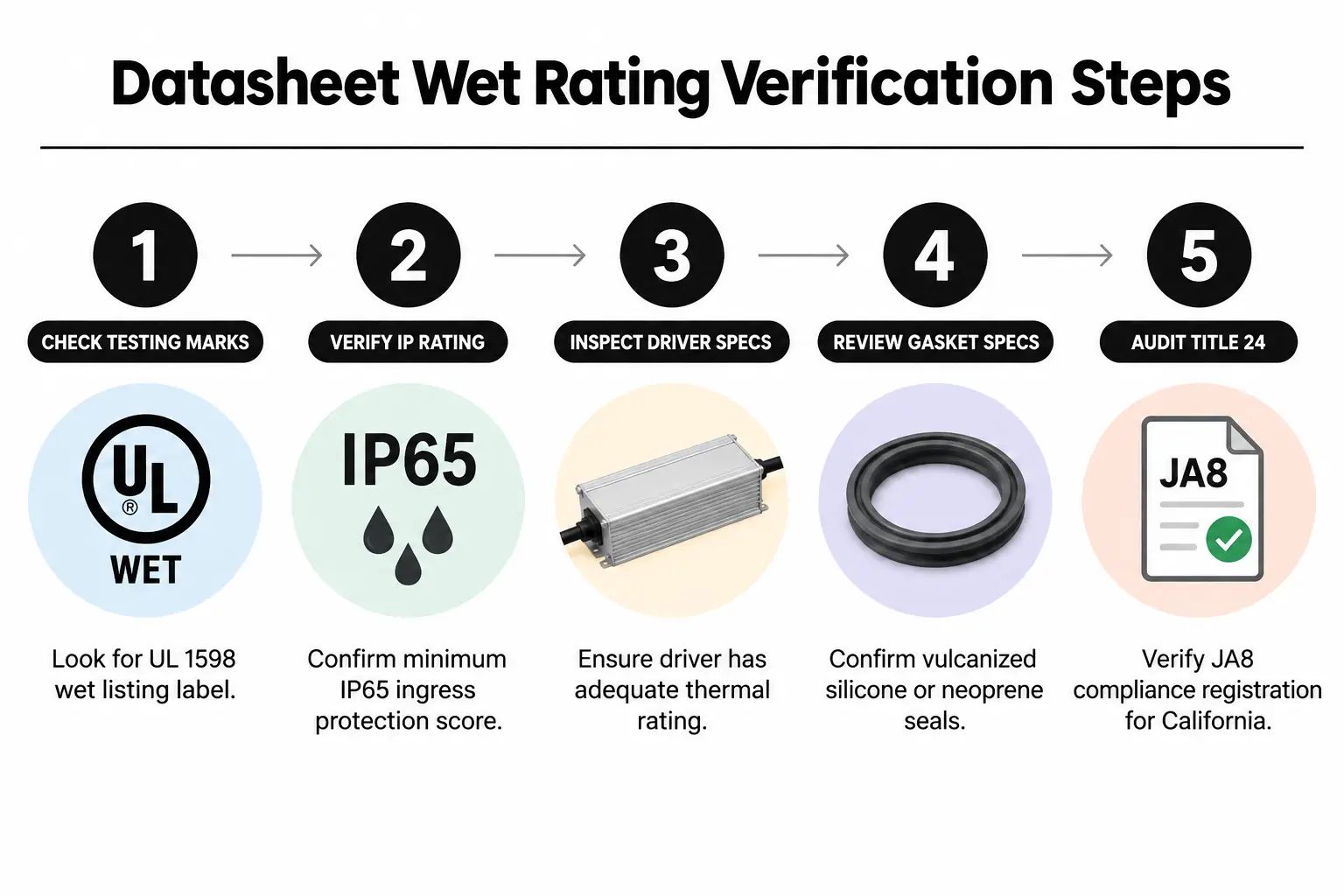
- Verify the exact location rating: Read the environmental section of the spec sheet. Look for “UL 1598 Wet Location” or “ETL Wet Listed,” rather than just “Damp Rated.”
- Check the Ingress Protection (IP) code: Confirm at least IP65 for the lens assembly and outer housing. This verifies resistance to continuous spray and water droplets hitting the fixture directly.
- Check the driver’s heat tolerance: Read the listed operating temperatures. Remote or internal LED drivers should handle ambient temperatures of at least 45°C. This allows for steam trapped in tight ceiling spaces.
- Inspect gasket and fastener materials: Confirm grade 304 or 316 stainless steel fasteners. Trim rings should use continuous silicone compression gaskets, not open foam tape.
- Confirm Title 24 JA8 certification: For California projects, check the listing in the California Energy Commission database. Confirm that the fixture meets state energy requirements.
This checklist helps prevent surprises at delivery. When choosing a commercial LED lighting wholesaler, ask for certified IES files, which record a fixture’s measured light output and distribution. Your supplier should also provide full manufacturer cut sheets on request.
Aligning Fixture Ratings with Specific Washroom Zones
Not every ceiling light in a commercial bathroom needs the same level of protection. Match each fixture to its water exposure. That keeps costs down without sacrificing electrical safety.
Enclosed Showers and Steam Chambers
Direct spray areas need fully sealed recessed fixtures. High-pressure steam quickly enters unsealed ceiling openings, damaging drywall and shorting electrical connections. A dedicated wet-rated LED disk or sealed canless downlight keeps an airtight moisture barrier across the ceiling in these locations.
Vanities, Mirrors, and Perimeter Ceilings
Fixtures more than three feet outside shower curbs and away from water basins usually need only damp ratings. That leaves more room for decorative lighting. For example, you can fit linear LED tape inside protective surface LED channels beneath floating mirrors or in ceiling coves.
If you’re considering mixing LED color temperatures in one room, keep the bathroom’s overall appearance in mind. Using a consistent 3000K or 3500K for both task and general lighting keeps the room looking cohesive.
Public Multi-Stall Restrooms
Large public restrooms face high humidity and frequent exposure to cleaning chemicals. Durable compact sealed fixtures or moisture-tolerant troffers, the broad fixtures fitted into ceiling grids, prevent vapor damage. For teams buying industrial LED lighting, checking the vapor seals also prevents moisture from reaching structural crawlspaces.
Installer’s note: For recessed lights directly over an enclosed shower, always apply a thin bead of clear bathroom-grade silicone around the gasket trim’s outer edge. This prevents vapor from seeping behind the ceiling drywall.
Costly Specifying Errors That Derail Inspections
The most common site mistake is treating damp-rated and wet-rated fixtures as interchangeable. Put a damp-rated light inside a shower stall, and water vapor condenses inside the lens. Within months, parts corrode and drivers fail. The result is expensive punch-list repairs and voided manufacturer warranties.
Air-leakage ratings are easy to overlook. Along California’s humid coast or in colder mountain areas, air entering unsealed ceiling fixtures can cause hidden attic mold. Specify fixtures marked ASTM E283 airtight as well as wet-rated. This stops moist indoor air from escaping into the framing.
Low-grade fixtures from non-specialist distributors often fail early. To find a reliable LED lighting wholesaler, check stock availability and ask for verified spec sheets. Full factory warranties matter too, because they protect you when fixtures fail on site.
Common Contractor Questions on Sealed Bathroom Fixtures
Can I put a damp-rated fixture over a residential bathtub?
Only if the fixture sits at least eight vertical feet above the top of the bathtub rim. Below that height, NEC Article 410 requires a certified wet-rated fixture. The same requirement applies within a three-foot horizontal spray perimeter.
What happens if a shower light lacks an airtight gasket?
Without a gasket, warm, moist air rises into the cold ceiling cavity or crawlspace above. It condenses on joists and drywall screws, causing mold and speeding up ceiling rot. That moisture can also short wire splices inside junction boxes.
How do I identify a wet rating on an installed fixture?
Remove the decorative baffle or pull down the trim ring to inspect the internal label. Look for a permanent UL or ETL listing mark that says “Suitable for Wet Locations.” The mark may be etched, stamped, or printed.
Are all outdoor-rated floodlights and sconces suitable for shower installations?
An outdoor fixture may be wet-rated but still be wrong for an indoor ceiling. Its size or light output may not suit the room, and it may shed heat differently. Bathrooms need compact fixtures with low-glare lenses and beam spreads suited to close-range tasks.
What is the minimum IP rating required for commercial washdown areas?
Commercial areas cleaned with pressurized hoses need fixtures rated at least IP65 or IP66. Lower-rated fixtures let water seep in over time. That can trip ground fault breakers, which detect current leaking outside its intended path, and damage driver circuit boards.
Procuring Certified Lighting Through Raycos Lighting
At Raycos Lighting, we prevent supply delays through our wholesale lighting and LED equipment service. We supply verified, code-compliant commercial products throughout California. Our customers include general contractors and electrical installers, as well as facility managers handling ongoing building needs.
Our warehouse stock keeps your project on schedule, from bulk recessed lights to architectural fixtures. We also help with Title 24 requirements. Contact our technical lighting sales team for sample fixtures or submittal packages, or to set up a wholesale project account.
One Response